Selected work
Private source
PizzaGo — Pickup ordering and branch admin for small pizzerias
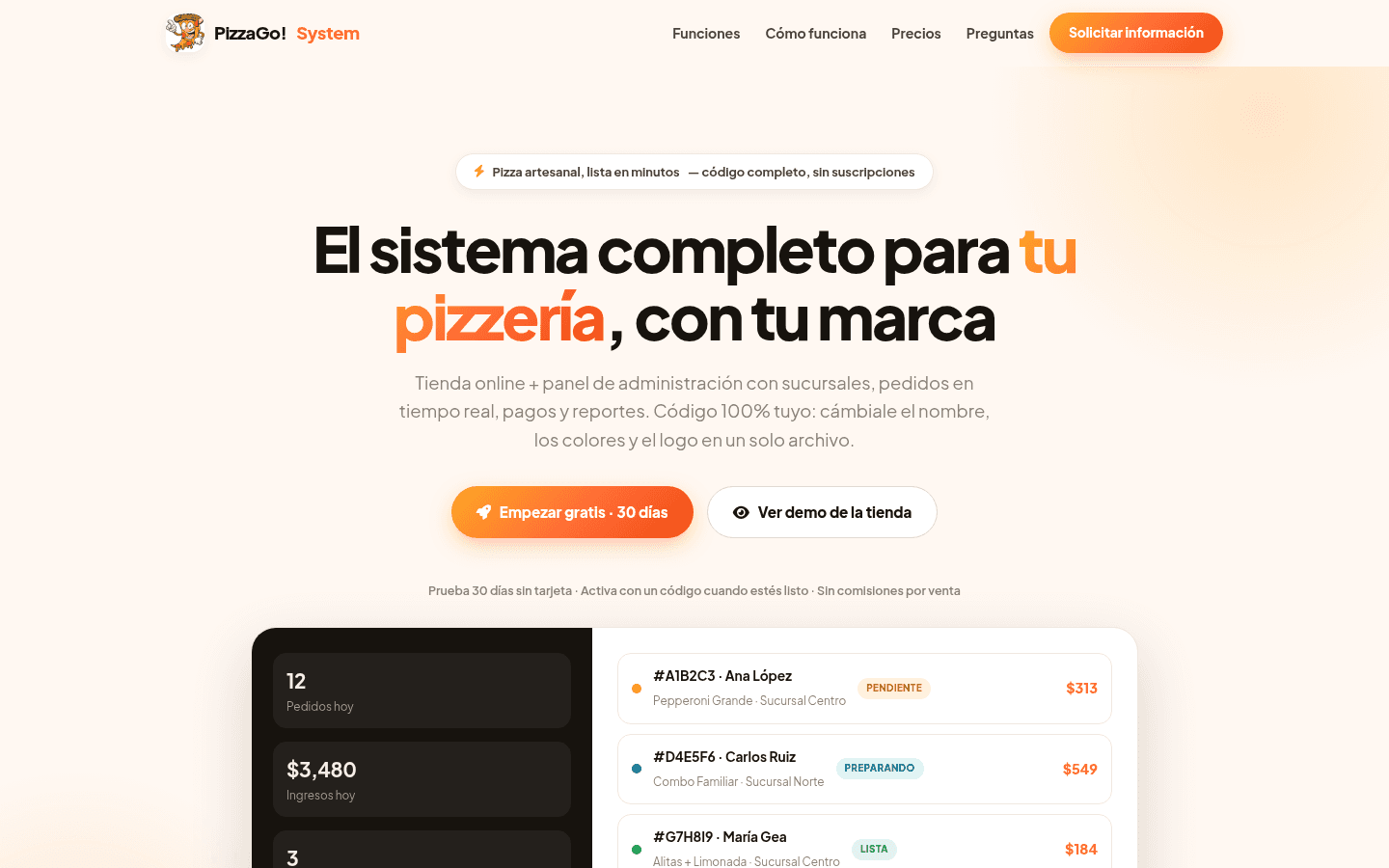
PizzaGo is a pickup-ordering storefront plus an admin panel for small pizzerias: branches, live order status, an editable menu, payments, and reporting, with the brand defined in a single configuration file.
Open live productPrivate source
Overview
I framed the product, built the storefront and the admin panel, wrote the Firestore rules and role model, produced the sales landing and its pricing, and tested the ordering journey on desktop and mobile.
Built a pickup storefront with a branch-aware panel, live order status, and payments the owner can rebrand and resell.
Context
The operating problem behind the interface.
Small pizzerias take orders through chat, phone calls, and paper. The owner needs a menu that can change without a developer, and the customer needs to know which branch will prepare the order.
Contribution
From customer signal to a system that can be used and shipped.
What I owned
I framed the product, built the storefront and the admin panel, wrote the Firestore rules and role model, produced the sales landing and its pricing, and tested the ordering journey on desktop and mobile.
What moved
- 01
I built one ordering journey from branch selection through cart, payment method, and a status the customer can follow.
- 02
I kept branding, currency, logo, and contact details in a single configuration file so the same build can be resold.
- 03
I separated admin and staff permissions in Firestore rules so the panel cannot be opened by an unlisted account.
- 04
I wrote the sales landing, the three license models, and the lead form that feeds the panel.
Key decision
Why this decision
I kept the system on static hosting with Firebase instead of adding a server, so a small restaurant pays almost nothing to run it and a junior developer can maintain the code.
What it taught me
PizzaGo confirmed that the hard part of commerce is not the cart. It is deciding how much the owner can change alone before a developer becomes necessary.
Result and current status
Result
The result is a product the owner can run and rebrand alone, plus a license offer for agencies that need the same system for their own restaurant clients.
Current status
PizzaGo is live at pizzago.online with the sales landing at the root and a public storefront demo. The repository and the license delivery stay private.
Evidence
Every plate is public-safe, privacy-reviewed, and labeled by evidence type. No customer or account data appears here.
01
I built one ordering journey from branch selection through cart, payment method, and a status the customer can follow.
02
I kept branding, currency, logo, and contact details in a single configuration file so the same build can be resold.
03
I separated admin and staff permissions in Firestore rules so the panel cannot be opened by an unlisted account.
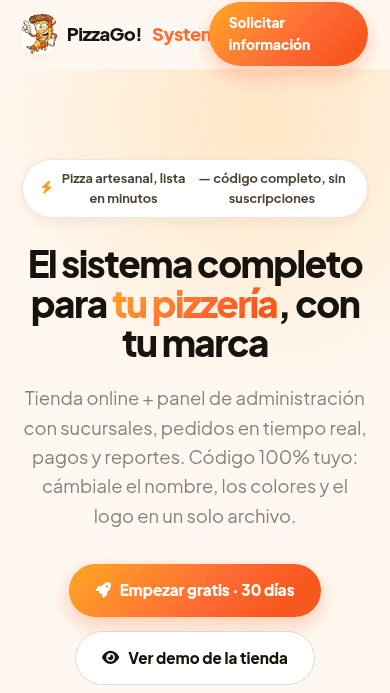
A short scroll through the PizzaGo landing and its public storefront demo.
Read the visual transcript
The walkthrough opens on the PizzaGo landing, moves through the features, pricing, and FAQ sections, and finishes on the public storefront demo with its seed menu and cart. The orders shown in the landing illustration are product mockups, not customer activity.
Limitations
- 01
The screenshots and walkthrough use the published landing and the public demo store; they do not show a real merchant's orders or revenue.
- 02
The orders visible in the landing illustration are product mockups, not customer activity.
- 03
Payments are handed to PayPal, Stripe, or Mercado Pago links; the portfolio does not confirm a settled transaction.
Technology
- HTML
- CSS
- JavaScript
- Firebase Auth
- Firestore
- PayPal
- Stripe
- Mercado Pago
- Static hosting
Source
Private source
Contact
Hiring and product teams
Need someone who can connect product judgment to delivery?
I am open to product, product operations, sales automation, and AI workflow roles where customer context matters.Discuss an opportunityFounders and operating teams